
If you think you are the only chess player to "hang a piece", miss a mate in one, or blow a won game - you are wrong! Masters do it more frequently than you can imagine. Here are a few examples with the possible "patzer prize move of the year" going to a former World Champion.

...............................
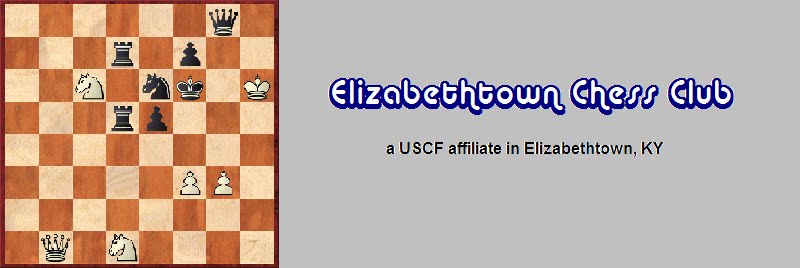
Alexey Shirov vs
Vladimer Kramnik -
Shanhai 2010
In the above position with Black to move; former World Champion
Kramnik dropped a piece with 37...Ne7. He resigned after 38.Nd6+.

................................................
Gilbaud vs
Lazard - Paris 1924
See diagram above - White resigned after only 4 moves in this game; 1.d4
Nf6 2.Nd2 e5 3.
dxe Ng4 4.h3 Ne3!!. White either loses his Queen or gets mated if he takes the Knight; one of the shortest recorded tournament games between two masters.
 ...............................Rubinstein vs Nimzovitch - San Sebastian 1912
Nimzovitch and Rubinstein were playing in the last round with Nimzovitch leading the tournament by 1/2 point. Despite needing only a draw to win the tournament Nimzovitch launched an all out attack which resulted in the lose of a Knight. In the diagrammed position above Nimzovitch played 25....Bc5?? over looking that he was allowing his opponent a mate in 2! Yet..Rubinstein played 26.Bd4??? instead of taking the forced mate; and the game continued 14 more moves before Nimzovitch resigned making Rubinstein the tournament winner.
Here is the complete game score:
1.d4 Nf6 2.c4 d6 3.Nf3 Nbd7 4.Nc3 e5 5.e4 Be7 6.Be2 0-0 7.0-0 Re8 8.Qc2 Bf8 9.b3 c6 10.Bb2 Nh5 11.g3 Nb8 12.Rad1 Qf6 13.Nb1 Bh3 14.Rfe1 Nf4 15.dxe5 dxe5 16.Nxe5 Rxe5 17.Bf1 Nd7
18.Qd2 Bxf1 19.Rxf1 Nh3+ 20.Kg2 Ng5 21.f4 Qg6 22.fxg5 Rxe4 23.Qxd7 Re2+ 24.Rf2 Qe4+ 25.Kg1 (see diagram above)...Bc5?? 26.Bd4??? Bxd4 27.Qxd4 Re1+ 28.Rf1 Rxf1+ 29.Kxf1 Qh1+ 30.Kf2 Qxh2+ 31.Kf3 f6 32.Qd2 Qh3 33.Qd7 f5 34.Nc3 Qh5+ 35.Kg2 Qxg5 36.Qe6+ Kh8 37.Ne2 Qh5 38.Rd7 Re8 39.Nf4 Rxe6 40.Nxh5 1-0

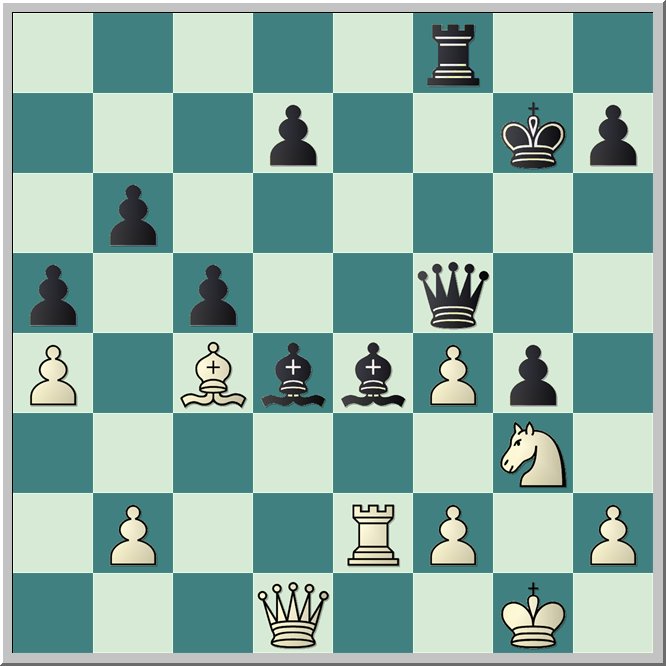 Alekhine who defeated Capablanca to become the 4th Chess Champion of the World was noted for his brilliant combinations. It is hard to believe that in the above position from a game with Buerger at Margate, 1937; Alekhine as Black played Qxf4??. I'm sure his heart stopped as Buerger picked up his Knight...and probably did a flutter beat as Buerger played NxBe4??!

